
Air Bubble Bag: A Complete Guide to Uses, Benefits, and Applications
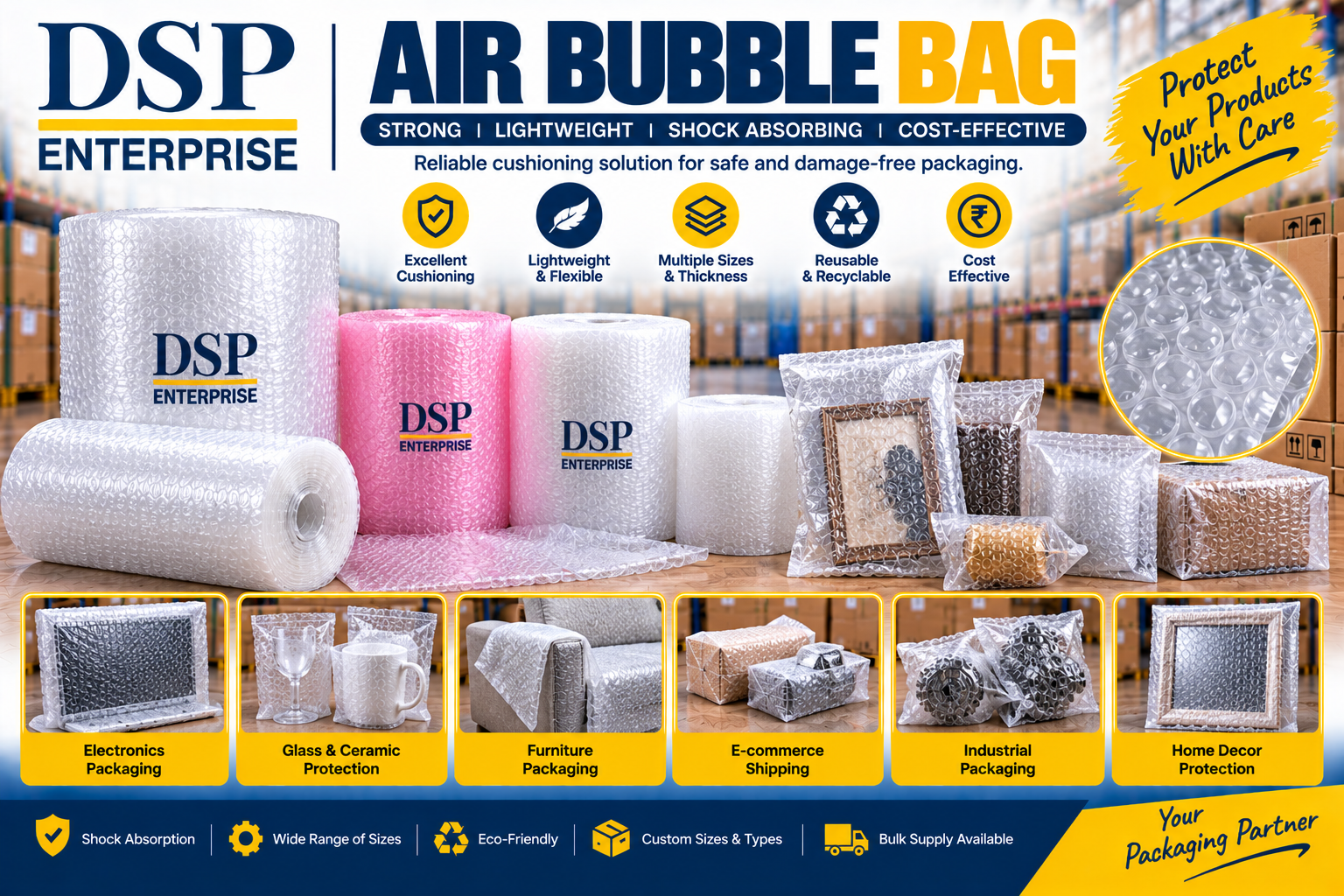
Air bubble bags are lightweight protective packaging products designed to safeguard fragile and delicate items during storage, handling, and transportation. Made with air-filled bubbles, these bags provide cushioning around products and help protect them from scratches, minor impacts, dust, and surface damage.
They are especially popular in e-commerce, electronics, retail, household moving, and industrial packaging.
What Is an Air Bubble Bag?
An air bubble bag is a pre-formed packaging bag made from flexible plastic film with air-filled bubbles. Unlike traditional bubble wrap rolls, the bag is ready to use, making the packaging process quicker and more convenient.
Products can simply be placed inside the bag and secured before being packed into an outer carton or shipping package.
Key Benefits of Air Bubble Bags
- Excellent cushioning: Air-filled bubbles help absorb minor shocks and vibrations.
- Scratch protection: Creates a protective barrier around product surfaces.
- Lightweight: Adds minimal weight to shipments.
- Easy to use: Products can be inserted quickly without extensive wrapping.
- Flexible: Suitable for products of different shapes and sizes.
- Dust protection: Helps keep products clean during handling and storage.
- Space-efficient: Empty bags take relatively little storage space.
- Time-saving: Pre-formed bags can speed up repetitive packaging operations.
Common Applications of Air Bubble Bags
Air bubble bags are commonly used for packaging:
- Electronics and accessories
- Mobile phones and computer components
- Glassware
- Ceramic products
- Decorative items
- Cosmetics
- Small household products
- Electrical components
- Hardware and industrial parts
- E-commerce products
Air Bubble Bags for E-Commerce Packaging
E-commerce products often pass through multiple stages of sorting, handling, and transportation before reaching the customer. Air bubble bags can provide an additional layer of protection inside shipping cartons.
They are particularly useful for small and medium-sized products that need protection from scratches and minor impacts.
Air Bubble Bags for Fragile Products
Fragile products require suitable cushioning to reduce the risk of damage during handling. An air bubble bag surrounds the product with a layer of air-filled cushioning.
For delicate items such as glass or ceramics, the bag can be used along with a strong outer carton and additional void-fill material where necessary.
Air Bubble Bag vs. Bubble Wrap Roll
Both products use air-filled bubbles for cushioning, but their application is different.
Air bubble bags are pre-formed and allow products to be inserted directly, making them convenient for repetitive packaging. Bubble wrap rolls provide greater flexibility because the material can be cut to different lengths and wrapped around products of various shapes.
The right option depends on product dimensions, packaging volume, and the required packaging method.
Types of Air Bubble Bags
- Standard Air Bubble Bags
Standard bubble bags are suitable for general-purpose protection of lightweight and moderately fragile products.
- Heavy-Duty Bubble Bags
These are designed with stronger film or cushioning characteristics for applications requiring additional protection.
- Anti-Static Air Bubble Bags
Anti-static bubble bags are designed for packaging sensitive electronic components where controlling static electricity is important.
- Customized Air Bubble Bags
Custom-sized bags can be manufactured according to specific product dimensions, helping provide a better fit and potentially reduce excess packaging material.
How to Choose the Right Air Bubble Bag
Before selecting an air bubble bag, consider:
- Product dimensions
- Product weight
- Fragility
- Bubble size
- Film thickness
- Required cushioning level
- Packaging volume
- Transportation conditions
- Whether anti-static protection is required
Selecting the right specifications can help improve product protection and packaging efficiency.
Why Quality Matters
The quality of an air bubble bag depends on factors such as film strength, bubble consistency, sealing quality, and overall manufacturing performance.
A reliable bag should maintain its structure during normal handling and provide consistent cushioning around the packaged product.
Tips for Using Air Bubble Bags
For effective packaging:
- Choose a bag that fits the product appropriately.
- Place the product carefully inside the bag.
- Ensure delicate surfaces are fully covered.
- Secure the opening properly before placing the item in the outer carton.
- Use additional cushioning for highly fragile or heavy products.
- Select an appropriately sized shipping box to minimize product movement.
Conclusion
Air bubble bags offer a simple, lightweight, and convenient protective packaging solution for fragile and surface-sensitive products. Their ready-to-use design makes them especially useful for e-commerce businesses, retailers, electronics suppliers, manufacturers, and warehouses.
By choosing the right bag size, bubble type, film thickness, and protective features, businesses can improve packaging efficiency while helping reduce scratches, minor impact damage, and handling-related product issues.
Find the right packaging for your business
Contact DSP Enterprise for product specifications and packaging solutions.
Request a Quote