
Cord Strap: A Complete Guide to Uses, Benefits, and Applications
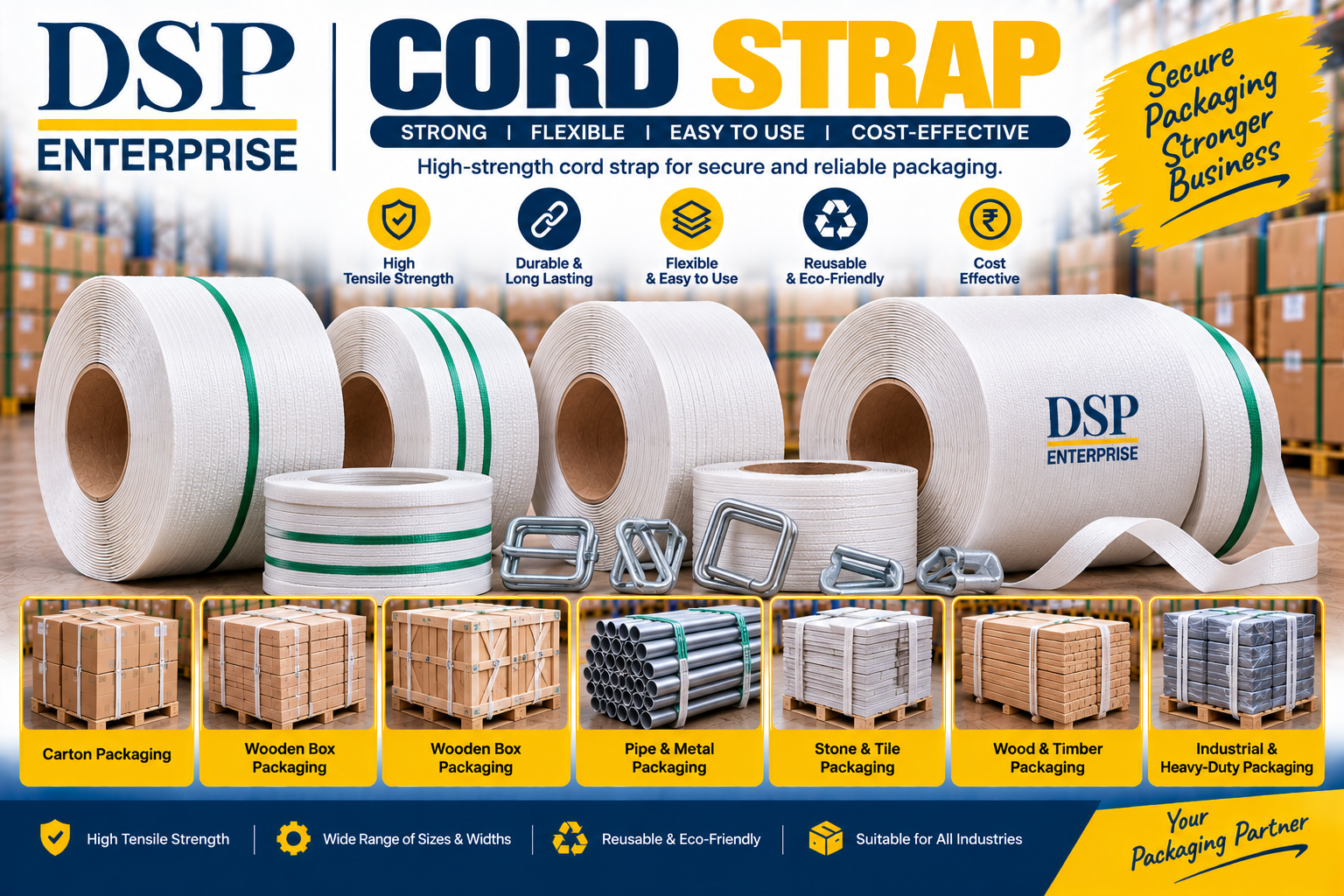
Cord strap is a strong and flexible packaging material used for securing, bundling, and stabilizing products during storage, handling, and transportation. Also known as composite strapping or corded strapping, it is commonly used for heavy and irregularly shaped loads that require reliable load restraint.
Its flexibility and high-strength construction make cord strap a popular choice in industries such as logistics, manufacturing, construction, furniture, and export packaging.
What Is Cord Strap?
Cord strap is a high-strength strapping material made from synthetic fibers embedded in or coated with a polymer-based structure. It is supplied in rolls and can be tightened around products or palletized loads.
Unlike rigid strapping materials, cord strap can conform to different product shapes, making it useful for securing bundles and irregular loads.
Key Benefits of Cord Strap
- High tensile strength: Helps secure heavy and bulky loads.
- Flexible: Can adapt to different shapes and sizes.
- Lightweight: Easier to handle than many heavy-duty strapping alternatives.
- Excellent load restraint: Helps prevent movement during transportation.
- Easy to use: Can be applied with suitable manual tensioning tools.
- Safe handling: Compared with steel strapping, cord strap does not have sharp metal edges.
- Suitable for irregular loads: Works well with products that are difficult to bundle using rigid straps.
- Versatile: Suitable for industrial, logistics, and export packaging.
Common Applications of Cord Strap
Cord strap is commonly used for securing:
- Timber and wooden products
- Pipes and tubes
- Metal products
- Furniture
- Construction materials
- Machinery components
- Industrial equipment
- Palletized goods
- Textile and paper rolls
- Heavy and irregular-shaped products
Cord Strap for Heavy-Duty Packaging
Heavy products need reliable restraint to minimize movement during transportation. Cord strap can be wrapped around bundles or pallet loads and tensioned to hold the products together.
For particularly heavy or demanding applications, the strap specification should be selected according to the actual load weight, dimensions, and transportation conditions.
Cord Strap for Irregular Loads
One of the main advantages of cord strap is its flexibility. It can conform to curved, uneven, or irregular-shaped products more easily than rigid strapping materials.
This makes it useful for bundling products such as pipes, timber, furniture components, and various industrial materials.
Cord Strap for Export Packaging
Export shipments can undergo multiple stages of loading, unloading, handling, and transportation. Proper load securing is therefore important.
Cord strap can be used with stretch film, edge protectors, corrugated sheets, and other packaging materials to create a more comprehensive load-securing system.
How to Use Cord Strap
A typical cord-strapping process involves:
- Positioning the strap around the product or load.
- Bringing the strap ends together.
- Applying the appropriate buckle or fastening system.
- Tensioning the strap using a suitable tool.
- Securing the strap properly.
- Checking the load for stability before transportation.
The exact process depends on the type of cord strap and fastening system being used.
Cord Strap vs. Other Strapping Materials
Different strapping materials are suited to different applications.
Cord strap is flexible and useful for irregular loads. PP strapping is commonly used for lighter general-purpose packaging, while PET strapping is often selected for stronger load-securing applications. Steel strapping is generally used where very high strength and rigid restraint are required.
The best choice depends on the product weight, load configuration, handling conditions, and required tensile strength.
How to Choose the Right Cord Strap
Before selecting cord strap, consider:
- Load weight
- Product shape and dimensions
- Required tensile strength
- Number of straps required
- Transportation conditions
- Fastening method
- Manual or machine application
- Storage environment
Selecting the appropriate strap strength and fastening system is essential for reliable load security.
Why Quality Matters
Cord strap performance depends on factors such as fiber quality, tensile strength, width, construction, and manufacturing consistency.
A quality strap should provide reliable tension retention and remain secure during normal handling and transportation. For heavy-duty applications, it is important to use a strap that matches the load requirements.
Tips for Effective Cord Strapping
For better packaging performance:
- Select the strap according to the load weight.
- Use the recommended buckle or fastening system.
- Apply appropriate tension without damaging the product.
- Use corner protection where straps may press against carton edges.
- Inspect straps for damage before use.
- Make sure the load is stable before moving it.
- Combine cord strap with stretch film when additional load containment is required.
Conclusion
Cord strap is a versatile and reliable solution for bundling and securing heavy, bulky, and irregular-shaped products. Its combination of strength, flexibility, lightweight construction, and convenient handling makes it suitable for manufacturing, logistics, construction, furniture, and export packaging.
By selecting the correct cord strap strength, size, fastening system, and application method, businesses can improve load stability and help ensure safer transportation and handling of their products.
Find the right packaging for your business
Contact DSP Enterprise for product specifications and packaging solutions.
Request a Quote