
Corrugated Roll: A Complete Guide to Uses, Benefits, and Applications
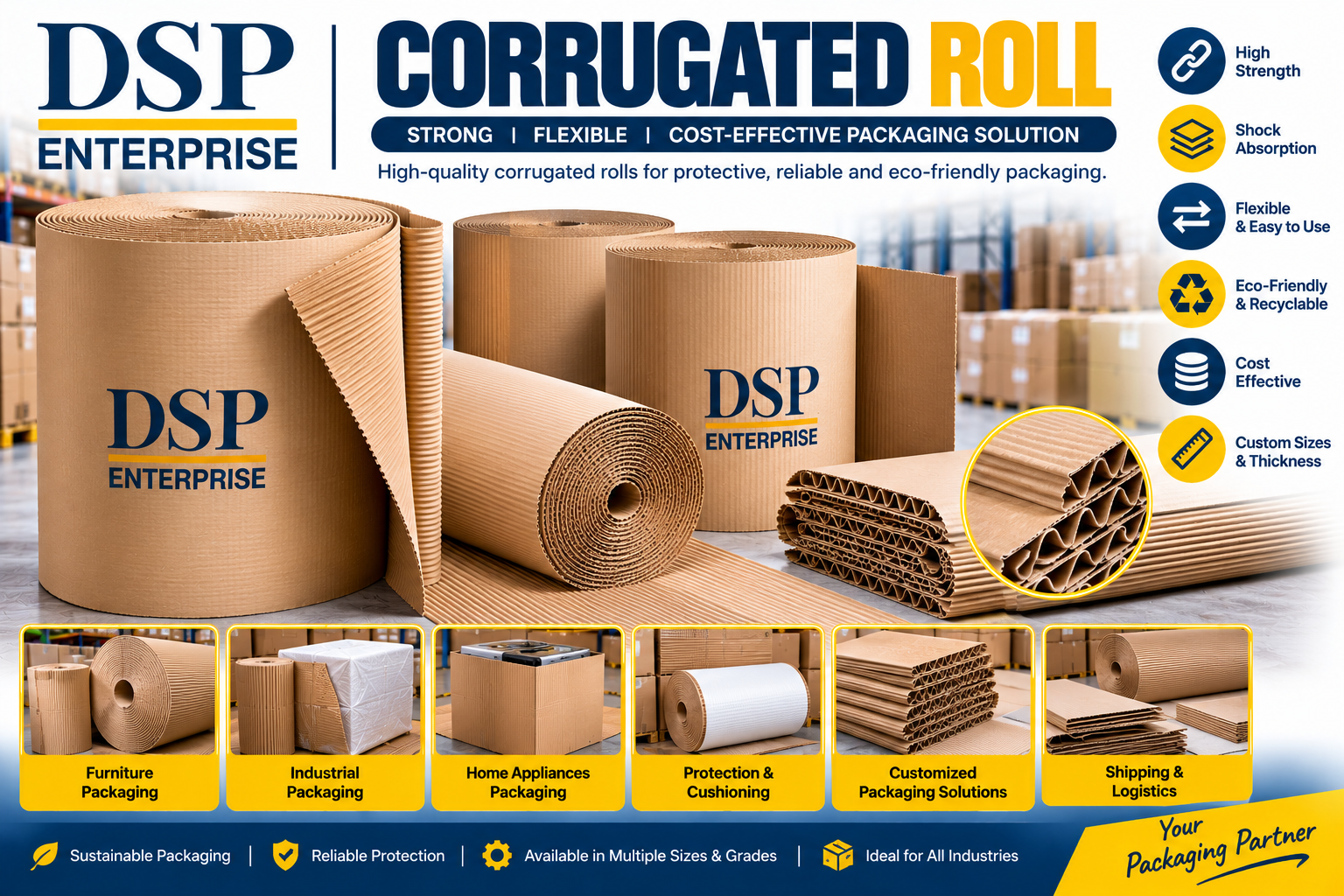
Corrugated roll is a flexible and practical packaging material widely used for protecting products during storage, handling, and transportation. Its fluted paper structure provides cushioning and helps reduce the risk of scratches, dents, and minor impact damage.
Because it can be cut and wrapped according to the size and shape of a product, corrugated roll is a convenient packaging option for manufacturers, warehouses, retailers, movers, and e-commerce businesses.
What Is a Corrugated Roll?
A corrugated roll is made from corrugated paperboard, generally consisting of a fluted paper layer bonded between flat paper liners. Unlike corrugated boxes, which are manufactured into a fixed shape, corrugated rolls are supplied in continuous rolls that can be cut to the required length.
This makes them particularly useful when products have different sizes and packaging requirements.
Key Benefits of Corrugated Roll
- Excellent cushioning: Helps absorb shocks and vibrations during handling.
- Lightweight: Adds relatively little weight to packaged products.
- Flexible: Can be wrapped around products of different shapes and sizes.
- Easy to cut: Can be customized to the required length.
- Surface protection: Helps protect products from scratches and abrasion.
- Space-efficient: Rolls can be stored compactly before use.
- Cost-effective: Suitable for businesses with varying packaging requirements.
- Paper-based: Can generally be recycled through appropriate paper recycling systems.
Common Applications of Corrugated Roll
Corrugated rolls are commonly used for:
- Furniture packaging
- Glass and ceramic protection
- Electronics packaging
- Machinery and industrial components
- Automotive parts
- Metal products
- Wooden products
- Home appliances
- E-commerce packaging
- Moving and relocation
Corrugated Roll for Product Protection
Products can become damaged when they rub against other products or packaging surfaces during transportation. Corrugated roll can be wrapped around individual items to create a protective layer.
It is particularly useful for products with painted, polished, coated, or delicate surfaces where preventing scratches and minor abrasions is important.
Corrugated Roll for Furniture Packaging
Furniture manufacturers, retailers, and moving companies frequently require flexible protective packaging. Corrugated roll can be wrapped around tables, chairs, cabinets, panels, and other furniture components.
It can help protect surfaces and edges during loading, unloading, movement, and storage.
Industrial Applications
Corrugated rolls are useful for industrial packaging because they can be cut to different lengths depending on the product. Manufacturers can use the material to separate components, wrap finished products, or provide an additional protective layer inside larger packaging.
For heavier or highly fragile products, corrugated roll can be combined with other cushioning materials to create a more comprehensive packaging system.
Corrugated Roll vs. Corrugated Box
Although both products are made from corrugated board, they serve different purposes.
Corrugated roll is supplied in a continuous format and is ideal for wrapping, cushioning, and separating products. Corrugated boxes are pre-formed packaging containers designed to hold and transport specific products.
Using corrugated roll can provide greater flexibility when product dimensions vary.
How to Choose the Right Corrugated Roll
Before purchasing corrugated roll, consider:
- Product size and shape
- Required roll width
- Material thickness
- Product weight
- Required cushioning level
- Transportation and storage conditions
- Quantity of packaging required
- Compatibility with other packaging materials
Selecting the right specifications can help improve protection while reducing unnecessary material usage.
Why Quality Matters
The performance of corrugated roll depends on factors such as paper quality, flute construction, thickness, and manufacturing consistency. A suitable roll should provide adequate cushioning and strength for the intended application.
For businesses with high-volume packaging requirements, consistent-quality corrugated rolls can also help improve packing efficiency and reduce material wastage.
Tips for Using Corrugated Roll
For effective product protection:
- Measure the product before cutting the roll.
- Use sufficient material to cover exposed surfaces.
- Pay extra attention to corners and edges.
- Secure the wrapping with suitable packaging tape when necessary.
- Combine with bubble wrap, EPE foam, or other cushioning materials for fragile products.
- Store rolls in a dry environment to maintain their condition.
Conclusion
Corrugated roll is a versatile and economical packaging material that provides flexibility for protecting products of different shapes and sizes. Its cushioning properties, lightweight construction, and easy-to-use roll format make it suitable for furniture, industrial products, e-commerce shipments, and many other applications.
Choosing the appropriate corrugated roll thickness, width, and flute specification can help businesses improve product protection, packaging efficiency, and overall transportation safety.
Find the right packaging for your business
Contact DSP Enterprise for product specifications and packaging solutions.
Request a Quote