
EPE Foam Bag: A Complete Guide to Protective Packaging Solutions
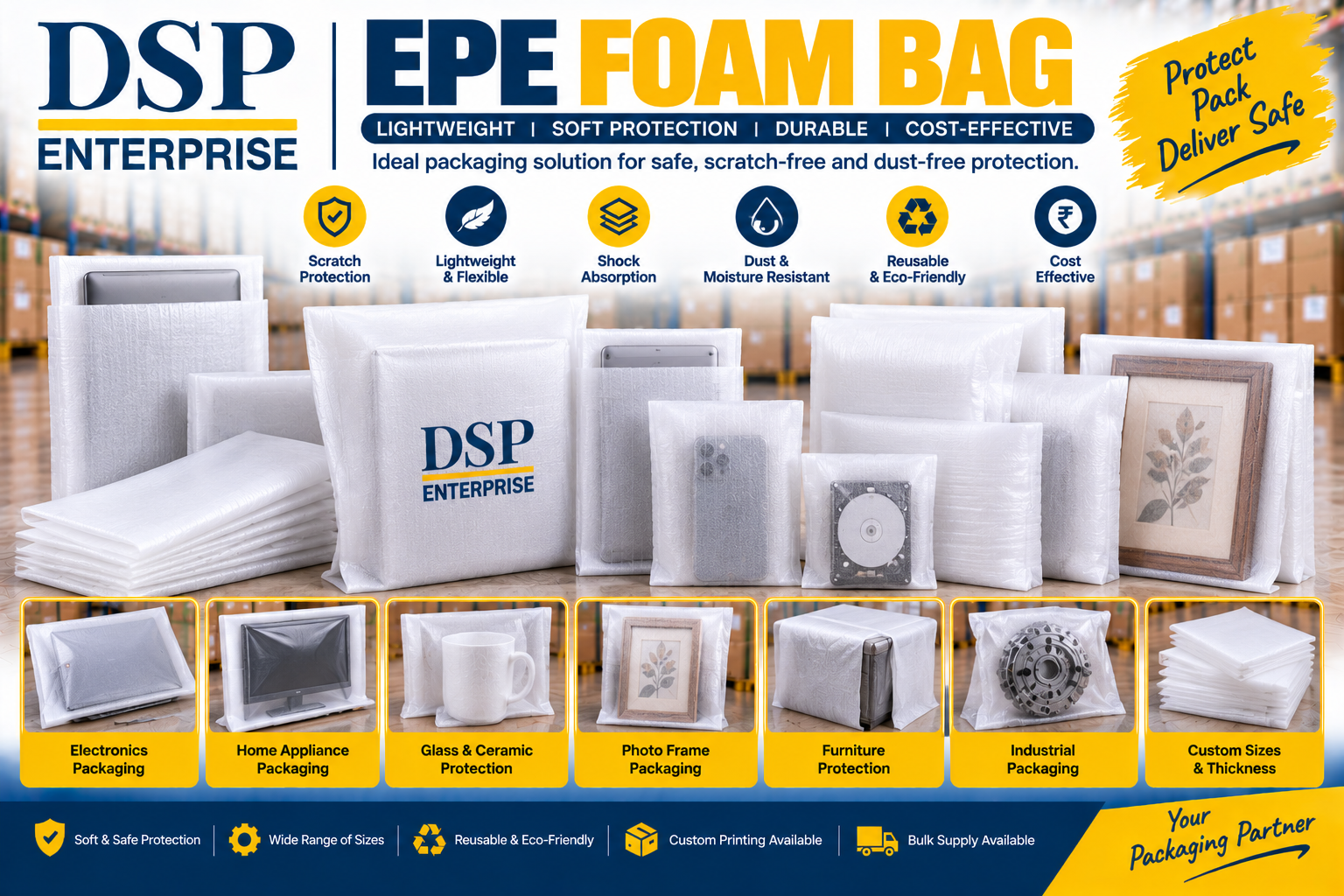
EPE foam bags are lightweight and flexible packaging products designed to protect delicate and valuable items from scratches, abrasion, minor impacts, dust, and moisture during storage and transportation. Made from Expanded Polyethylene (EPE) foam, these bags provide a soft protective layer around products without adding significant weight.
EPE foam bags are widely used in electronics, furniture, glassware, industrial components, e-commerce, and many other packaging applications.
What Is an EPE Foam Bag?
An EPE foam bag is a pre-formed bag made from flexible EPE foam material. The foam's closed-cell structure provides cushioning and helps prevent direct contact between the product and external surfaces.
Unlike EPE foam sheets that need to be cut and wrapped, foam bags are ready to use, which can make the packaging process faster and more convenient.
Key Benefits of EPE Foam Bags
- Excellent cushioning: Helps protect products from minor shocks and vibrations.
- Scratch protection: Provides a soft layer around delicate surfaces.
- Lightweight: Adds minimal weight to packaged products.
- Flexible: Can accommodate products of different shapes and sizes.
- Moisture resistant: Closed-cell foam offers resistance to moisture.
- Easy to use: Products can be inserted directly into the bag.
- Reusable in suitable applications: Bags can potentially be reused when they remain clean and undamaged.
- Customizable: Can be produced in different sizes, thicknesses, and configurations.
Common Applications of EPE Foam Bags
EPE foam bags are commonly used for protecting:
- Electronics and accessories
- Glass products
- Ceramic items
- Furniture components
- Home appliances
- Metal and aluminum parts
- Automotive components
- Hardware products
- Decorative items
- E-commerce products
EPE Foam Bags for Electronics
Electronic products and components often have sensitive surfaces that can be damaged by scratches and friction. EPE foam bags provide a soft protective layer between the product and outer packaging.
They can be used for items such as electronic accessories, small devices, components, and finished products before placing them inside corrugated cartons.
For static-sensitive electronics, an appropriate anti-static packaging solution should be selected instead of assuming standard EPE foam provides static protection.
EPE Foam Bags for Furniture
Furniture components can be vulnerable to surface scratches during handling and transportation. EPE foam bags or customized foam covers can help protect finished surfaces, edges, and individual components.
They can be combined with corrugated sheets, stretch film, or other packaging materials for additional protection.
EPE Foam Bags for Industrial Products
Manufacturers often require protective packaging for machined, painted, polished, or coated components. EPE foam bags can help prevent products from rubbing against one another during transportation.
Their flexible construction makes them suitable for a variety of small and medium-sized industrial components.
Types of EPE Foam Bags
- Standard EPE Foam Bags
Standard bags are suitable for general-purpose packaging and surface protection.
- Heavy-Duty EPE Foam Bags
Heavy-duty varieties can be made with greater foam thickness or density for applications requiring additional cushioning.
- Customized EPE Foam Bags
Custom-sized bags can be manufactured to fit specific product dimensions. A better fit can help improve protection and reduce excess packaging material.
- Anti-Static EPE Foam Bags
For sensitive electronic components, specially designed anti-static EPE packaging should be used when static-control requirements apply.
How to Choose the Right EPE Foam Bag
Before selecting an EPE foam bag, consider:
- Product size and dimensions
- Product weight
- Surface sensitivity
- Required foam thickness
- Foam density
- Type of transportation
- Storage conditions
- Whether customized or anti-static protection is required
- Selecting the correct specifications helps ensure that the product receives appropriate protection throughout its handling and transportation cycle.
EPE Foam Bag vs. EPE Foam Sheet
Both products are made from EPE foam, but they are designed for different packaging processes.
EPE foam bags are ready-made and allow quick product insertion. They are particularly convenient for repetitive packaging operations.
EPE foam sheets offer greater flexibility because they can be cut, folded, or wrapped around products of different shapes and sizes.
The choice depends on the product design, packaging volume, and required protection.
Why Quality Matters
The performance of an EPE foam bag depends on factors such as foam density, thickness, flexibility, sealing quality, and dimensional accuracy.
A properly manufactured bag should provide consistent cushioning and fit the product appropriately. For industrial and high-volume applications, consistent quality can help improve packaging efficiency and reduce product damage.
Tips for Using EPE Foam Bags
For effective product protection:
- Select a bag that fits the product without excessive compression.
- Ensure the entire sensitive surface is covered.
- Use additional cushioning for particularly fragile products.
- Combine the foam bag with a suitable outer carton.
- Avoid placing sharp objects directly against the foam.
- Store unused bags in a clean and dry environment.
- For electronic components, use an appropriate anti-static solution when required.
Conclusion
EPE foam bags are a practical and lightweight solution for protecting products against scratches, abrasion, minor impacts, and moisture. Their ready-to-use design makes them convenient for manufacturers, retailers, warehouses, movers, and e-commerce businesses.
By selecting the right EPE foam bag size, thickness, density, and design, businesses can improve product protection, streamline their packaging process, and reduce the risk of handling-related damage.
Find the right packaging for your business
Contact DSP Enterprise for product specifications and packaging solutions.
Request a Quote