
EPE Foam Sheet: A Complete Guide to Uses, Benefits, and Applications
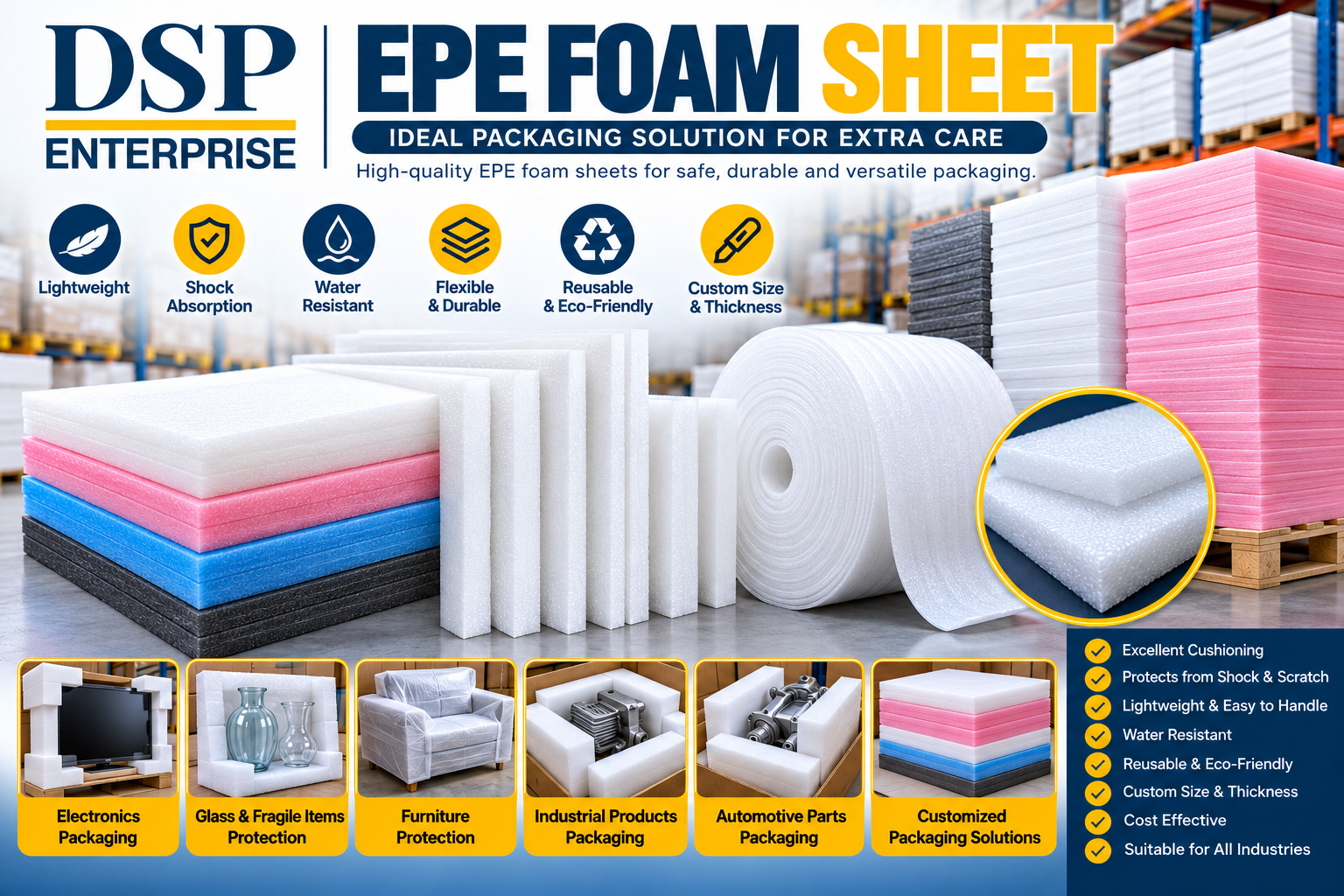
EPE foam sheet is a lightweight and flexible packaging material widely used for protecting products from scratches, vibration, impact, and surface damage. EPE stands for Expanded Polyethylene, a closed-cell foam material known for its cushioning and moisture-resistant properties.
From industrial packaging to furniture protection and construction applications, EPE foam sheets are a practical solution for businesses looking for lightweight and reliable protective material.
What Is an EPE Foam Sheet?
EPE foam sheet is manufactured from polyethylene and contains tiny closed air cells that provide cushioning and flexibility. The material is soft, lightweight, and easy to cut, fold, and wrap around products.
EPE foam sheets are available in different thicknesses, widths, densities, and sizes, allowing users to select a suitable option according to their packaging requirements.
Key Benefits of EPE Foam Sheets
- Excellent cushioning: Helps absorb minor shocks and vibrations during transportation.
- Lightweight: Adds very little weight to packaged products.
- Surface protection: Helps prevent scratches, dents, and scuff marks.
- Moisture resistant: Closed-cell construction provides resistance to moisture.
- Flexible and easy to handle: Can be cut, folded, wrapped, or shaped as required.
- Reusable: Depending on its condition, EPE foam can often be reused for multiple packaging applications.
- Cost-effective: Provides effective product protection without significantly increasing packaging weight.
Common Applications of EPE Foam Sheet
EPE foam sheets are used in many industries, including:
- Furniture packaging
- Glass and ceramic protection
- Electronics packaging
- Automobile components
- Machinery and industrial equipment
- Home appliance packaging
- Flooring and construction applications
- Decorative and craft applications
- E-commerce product packaging
- Metal and finished-surface protection
EPE Foam Sheet for Packaging
One of the major uses of EPE foam sheets is protective packaging. The foam can be placed between products and outer cartons to create a cushioning layer.
It is especially useful for products with polished, painted, coated, or otherwise sensitive surfaces. During transportation and handling, the foam helps reduce the risk of scratches and minor surface damage.
EPE Foam for Furniture Protection
Furniture manufacturers, retailers, and movers commonly use EPE foam to protect tables, chairs, cabinets, glass panels, and other items.
The flexible structure allows the foam to cover corners and surfaces while providing a protective layer between the product and external packaging materials.
EPE Foam Sheet for Industrial Applications
Industrial products often require protection against abrasion and surface damage during storage and transportation. EPE foam sheets can be used to separate individual components and prevent products from rubbing against each other.
For customized packaging, EPE foam can also be converted into specific shapes and sizes to fit individual products.
How to Choose the Right EPE Foam Sheet
When selecting an EPE foam sheet, consider the following factors:
- Thickness: Choose according to the required cushioning and protection level.
- Density: Different products may require different foam densities.
- Sheet size: Select dimensions suitable for your packaging process.
- Product type: Fragile, heavy, or surface-sensitive products may require different specifications.
- Application: Packaging, insulation, furniture protection, and industrial uses may have different requirements.
EPE Foam Sheet vs. Other Packaging Materials
EPE foam offers a useful combination of light weight, flexibility, cushioning, and moisture resistance. Unlike rigid protective materials, it can easily conform to different product shapes.
The right packaging material ultimately depends on the product, transportation conditions, required protection, and packaging budget.
Why Quality Matters
The performance of EPE foam depends on factors such as density, thickness, consistency, and manufacturing quality. Using an appropriate grade can help provide better cushioning and surface protection while reducing packaging problems.
For businesses handling large quantities of products, selecting the right EPE foam specification can also improve packaging efficiency and reduce material wastage.
Conclusion
EPE foam sheet is a versatile and lightweight protective material suitable for packaging, furniture protection, industrial applications, and many other uses. Its cushioning properties, flexibility, and resistance to moisture make it a popular choice for protecting products during handling, storage, and transportation.
By selecting the appropriate EPE foam sheet thickness, density, and size, businesses can create an effective packaging solution while maintaining product safety and packaging efficiency.
Find the right packaging for your business
Contact DSP Enterprise for product specifications and packaging solutions.
Request a Quote