
Honeycomb Wrapping Paper: A Sustainable Packaging Solution for Product Protection
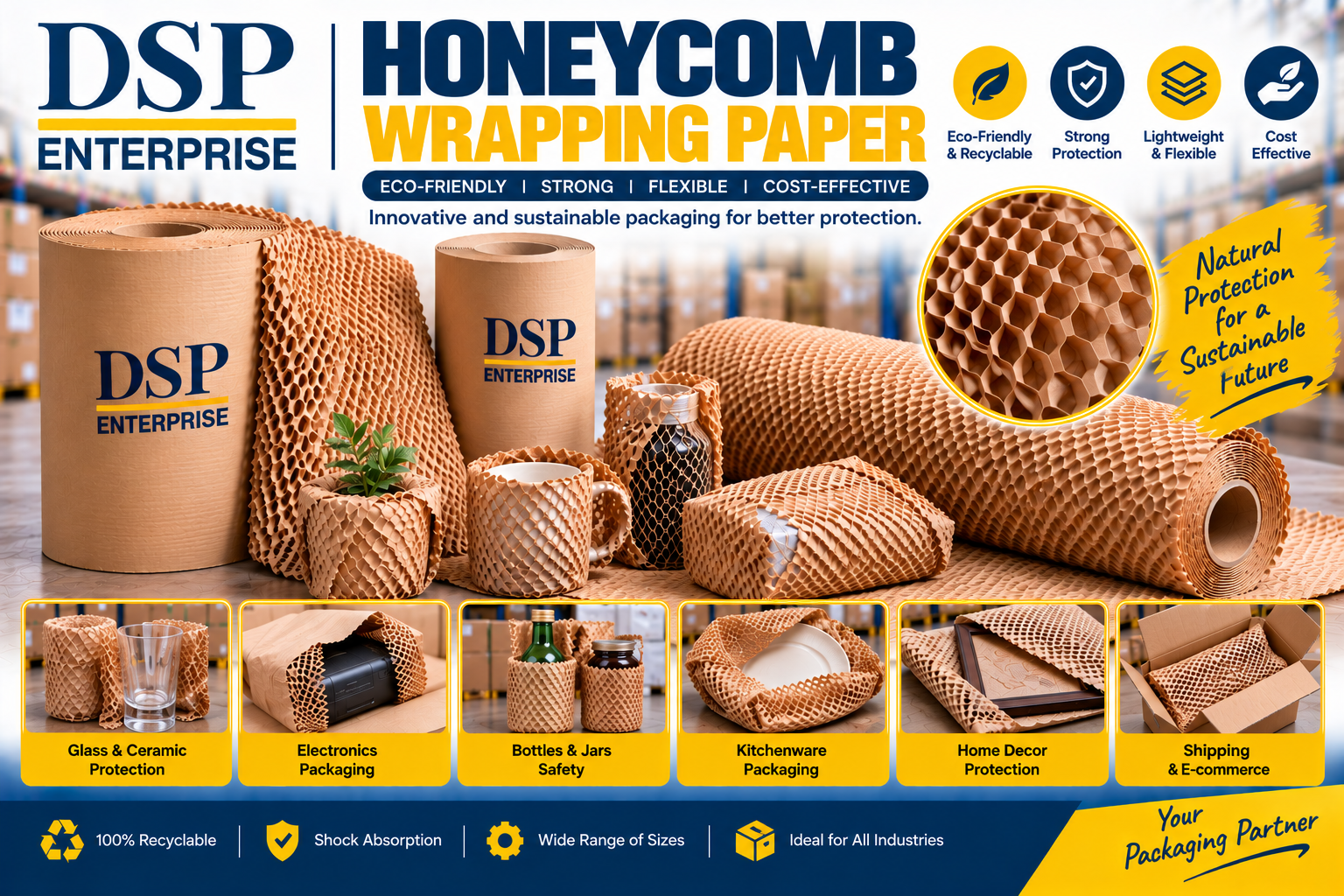
Honeycomb wrapping paper is an innovative and eco-friendly packaging material designed to protect products during storage, handling, and transportation. Its unique honeycomb structure allows the paper to expand and provide cushioning around products while using a lightweight, paper-based material.
It is particularly useful for businesses looking for an alternative to conventional plastic-based protective packaging for suitable applications.
What Is Honeycomb Wrapping Paper?
Honeycomb wrapping paper is made from specially processed paper that forms a three-dimensional honeycomb pattern when stretched or expanded. This structure creates cushioning and helps wrap products securely.
The material can be used to wrap individual products or as a protective layer inside boxes. It is commonly used for fragile items such as glassware, ceramics, decorative products, and household goods.
Key Benefits of Honeycomb Wrapping Paper
- Protective cushioning: The expanded structure helps absorb minor impacts.
- Lightweight: Adds relatively little weight to packages.
- Flexible: Can wrap around products with different shapes.
- Surface protection: Helps reduce scratches and scuffing.
- Paper-based: Suitable for businesses seeking paper-based packaging options.
- Easy to use: Can be torn or cut according to packaging requirements.
- Attractive presentation: Provides a neat and premium appearance for packaged products.
- Space efficient: Rolls can be stored compactly before expansion and use.
Common Applications of Honeycomb Wrapping Paper
Honeycomb wrapping paper can be used for packaging:
- Glass bottles and glassware
- Ceramic products
- Crockery
- Decorative items
- Home décor products
- Cosmetics and gift items
- Small electronics
- Handcrafted products
- E-commerce shipments
- Retail products
Honeycomb Wrapping Paper for Fragile Products
Fragile products can be vulnerable to scratches and minor impacts during transportation. Honeycomb wrapping paper creates a cushioning layer around the product, helping reduce direct contact with other items and packaging surfaces.
For highly fragile or heavy products, it can be combined with additional cushioning materials and appropriately sized cartons.
Honeycomb Paper for E-Commerce Packaging
E-commerce businesses need packaging that protects products while also creating a positive customer experience. Honeycomb wrapping paper can be used to wrap individual products before placing them inside shipping cartons.
Its attractive appearance can also provide a more refined unboxing experience compared with conventional protective packaging.
Honeycomb Wrapping Paper vs. Bubble Wrap
Honeycomb wrapping paper and bubble wrap both provide protective cushioning, but they differ in material and construction.
Honeycomb wrapping paper is paper-based and expands into a three-dimensional structure. Bubble wrap uses air-filled plastic bubbles to provide cushioning.
The appropriate option depends on factors such as the product's fragility, required cushioning, packaging design, environmental objectives, and transportation conditions.
How to Use Honeycomb Wrapping Paper
Using honeycomb wrapping paper is simple:
- Measure the product that needs protection.
- Cut or tear an appropriate length of paper.
- Gently expand the honeycomb structure.
- Wrap the product completely.
- Secure the wrapping when necessary.
- Place the wrapped item inside a suitable carton or shipping box.
For fragile products, ensure that vulnerable corners and surfaces receive adequate protection.
How to Choose the Right Honeycomb Wrapping Paper
Before selecting honeycomb wrapping paper, consider:
- Product size and shape
- Product fragility
- Required cushioning level
- Paper thickness and quality
- Roll width and length
- Packaging volume
- Shipping and handling conditions
- Compatibility with the outer carton
Choosing the right specification can help improve packaging efficiency and reduce material wastage.
Why Quality Matters
The performance of honeycomb wrapping paper depends on factors such as paper quality, cell structure, thickness, stretchability, and manufacturing consistency.
High-quality material should expand properly and provide consistent coverage around the product. Selecting suitable paper for the application is important, especially when packaging fragile or valuable items.
Tips for Effective Honeycomb Paper Packaging
For better results:
- Use enough paper to cover the entire product.
- Pay special attention to corners and delicate surfaces.
- Avoid excessive stretching that could reduce effective coverage.
- Select an appropriately sized carton.
- Fill significant empty spaces inside the carton with suitable cushioning material.
- Store the paper in a dry environment to maintain its condition.
Conclusion
Honeycomb wrapping paper is a versatile paper-based packaging material that combines cushioning, flexibility, lightweight construction, and attractive presentation. It is suitable for protecting a wide range of fragile and surface-sensitive products during storage and transportation.
For businesses seeking efficient paper-based protective packaging, honeycomb wrapping paper can be a practical option for e-commerce, retail, manufacturing, gifting, and general product packaging applications.
Find the right packaging for your business
Contact DSP Enterprise for product specifications and packaging solutions.
Request a Quote