
Masking Tape: A Complete Guide to Uses, Benefits, and Applications
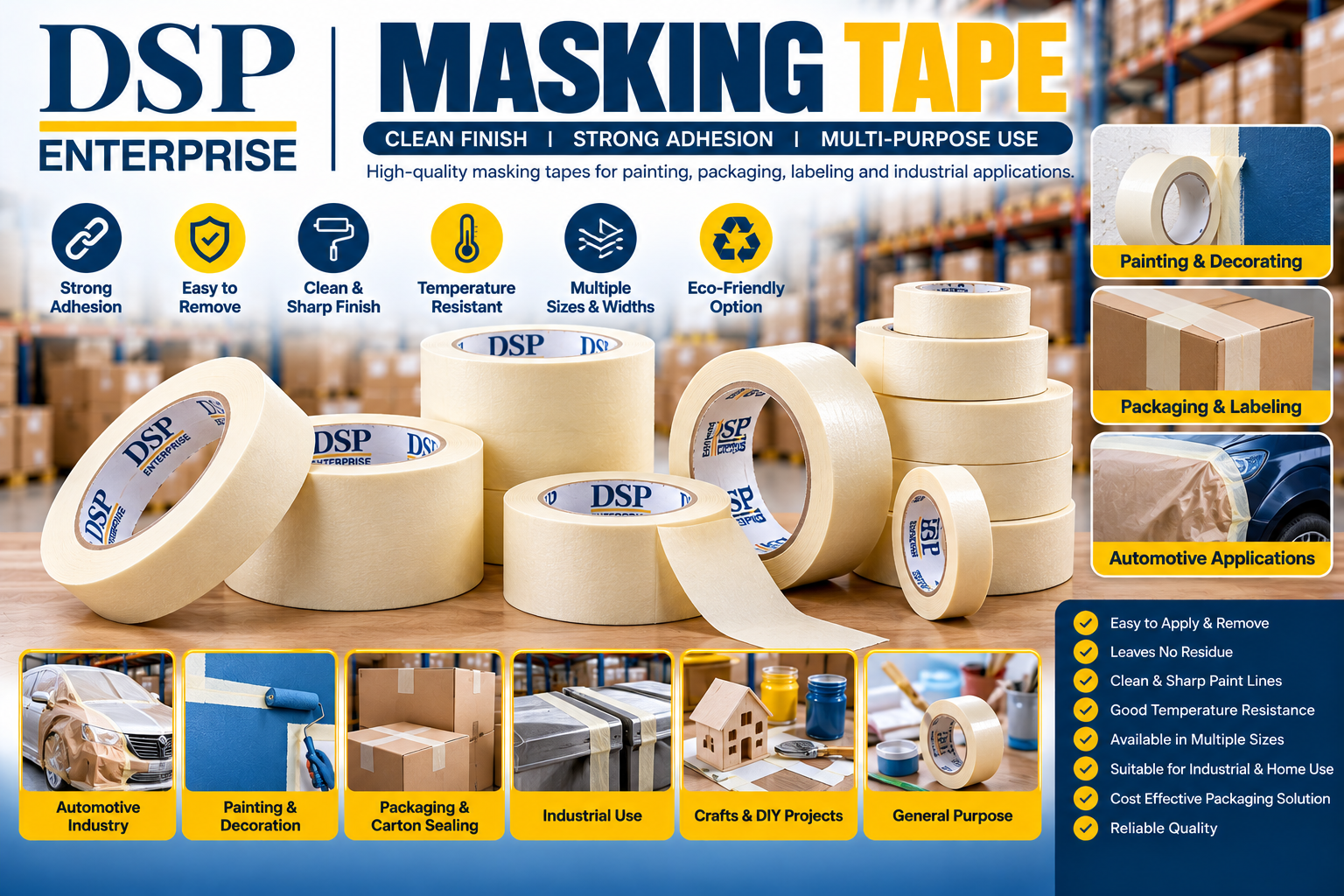
Masking tape is a versatile pressure-sensitive adhesive tape widely used for painting, surface protection, labeling, bundling, and various industrial applications. It is designed to provide secure adhesion while generally allowing clean removal when used under suitable conditions.
Available in different widths, thicknesses, and adhesive strengths, masking tape can be selected according to the surface and application.
What Is Masking Tape?
Masking tape is typically made with a paper-based backing coated with a pressure-sensitive adhesive. Its easy-to-tear construction makes it convenient for both professional and everyday applications.
One of its key features is its ability to hold firmly during use while being removable from many surfaces without leaving significant adhesive residue when used appropriately.
Key Benefits of Masking Tape
- Easy to apply: Can be quickly applied by hand.
- Easy to tear: Most varieties can be torn without scissors.
- Convenient removal: Designed for relatively clean removal under suitable conditions.
- Surface protection: Helps protect selected areas during painting and finishing work.
- Excellent versatility: Suitable for household, commercial, automotive, and industrial applications.
- Available in different widths: Allows users to choose the appropriate tape for their requirements.
- Useful for temporary marking: Can be used for labels, identification, and temporary instructions.
Common Applications of Masking Tape
Masking tape is commonly used for:
- Painting and decorating
- Automotive painting
- Surface protection
- Labeling and identification
- Bundling lightweight items
- Craft and DIY projects
- Packaging applications
- Electrical and industrial work
- Construction and maintenance
- Temporary marking
Masking Tape for Painting
One of the most familiar uses of masking tape is painting. It can be applied along edges, trims, frames, and other areas that need protection from paint.
When used correctly, masking tape can help create cleaner paint lines and reduce accidental paint transfer onto adjacent surfaces.
For best results, the surface should generally be clean and dry, and the tape should be selected according to the type of surface and paint project.
Automotive Masking Tape
Automotive workshops use masking tape during painting and refinishing processes to protect areas that should not receive paint or coatings.
Automotive masking tapes are available in formulations designed for different paint systems, temperatures, and application conditions.
Industrial Applications
Masking tape is also useful in manufacturing, maintenance, assembly, and other industrial environments. It can be used for temporary identification, bundling, marking, and protecting surfaces during specific processes.
The correct tape should be selected based on factors such as temperature, surface type, required adhesion, and removal time.
Types of Masking Tape
- General-Purpose Masking Tape
General-purpose masking tape is suitable for everyday household, office, maintenance, and basic painting applications.
- Painter's Masking Tape
Painter's tape is designed specifically for painting and decorating. Different varieties are available for different surfaces and levels of edge precision.
- Automotive Masking Tape
Automotive masking tapes are designed for vehicle repair, refinishing, and painting applications where reliable adhesion and clean removal are important.
- High-Temperature Masking Tape
High-temperature masking tapes are designed for applications where the tape may be exposed to elevated temperatures for a specified period.
How to Choose the Right Masking Tape
Before selecting masking tape, consider:
- Surface type
- Application temperature
- Required adhesion
- How long the tape will remain applied
- Whether clean removal is important
- Tape width and thickness
- Type of paint, coating, or process involved
Choosing the appropriate tape can improve application quality and reduce the possibility of adhesive residue or surface damage.
Tips for Using Masking Tape
For better results:
- Make sure the surface is clean and dry.
- Apply the tape smoothly without unnecessary wrinkles.
- Press the edges firmly when creating a paint boundary.
- Avoid leaving the tape on a surface longer than recommended.
- Remove the tape carefully according to the manufacturer's instructions.
- Test the tape on an inconspicuous area when working with sensitive surfaces.
Why Quality Matters
The quality of masking tape can affect adhesion, removal, surface protection, and overall performance. A suitable product should provide consistent adhesion and appropriate holding strength for its intended application.
For professional painting, automotive, and industrial work, selecting a tape designed specifically for the application can provide better results than using a general-purpose product.
Conclusion
Masking tape is a practical and versatile adhesive solution used across painting, automotive, industrial, construction, maintenance, and household applications. Its easy application, convenient removal, and availability in different specifications make it useful for both professionals and everyday users.
By selecting the right masking tape width, adhesive strength, temperature resistance, and surface compatibility, you can achieve better results while protecting surfaces during your work.
Find the right packaging for your business
Contact DSP Enterprise for product specifications and packaging solutions.
Request a Quote