
Protective Sleeve Net: A Complete Guide to Uses, Benefits, and Applications
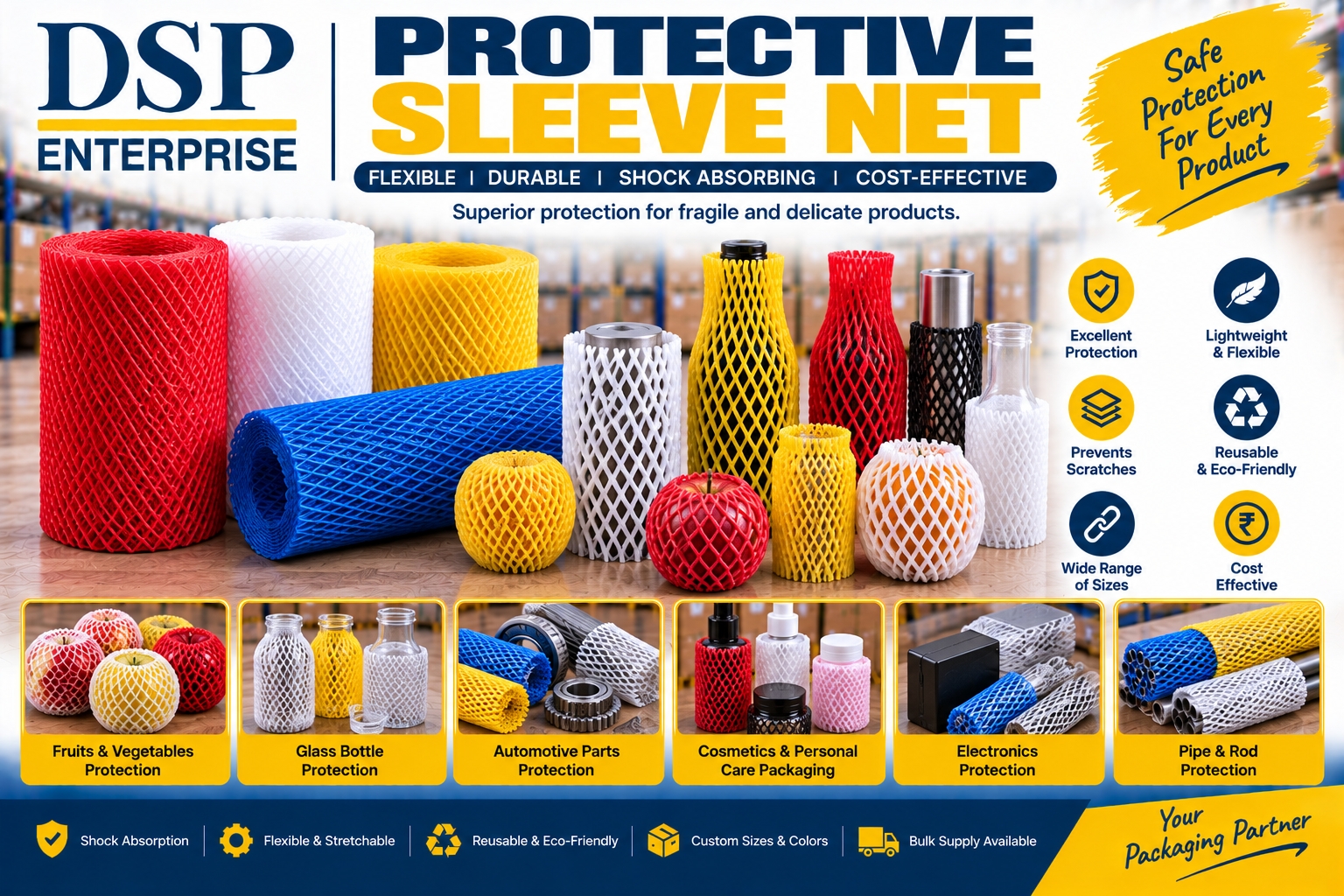
Protective sleeve net is a flexible packaging solution designed to protect products from scratches, dents, abrasion, and minor impact during storage, handling, and transportation. Its soft, expandable structure allows it to fit around products of different shapes while creating a protective layer between the product and surrounding surfaces.
Protective sleeve nets are widely used for packaging glass, metal components, furniture parts, bottles, automotive components, and other delicate or surface-sensitive products.
What Is a Protective Sleeve Net?
A protective sleeve net is typically made from flexible plastic material formed into a mesh-like tubular structure. The sleeve can expand to accommodate different product sizes and shapes.
It is designed to slide easily over a product, providing cushioning and helping prevent direct contact between individual items during handling and transportation.
Key Benefits of Protective Sleeve Nets
- Excellent surface protection: Helps prevent scratches, scuffs, and abrasion.
- Flexible and expandable: Can accommodate products of different shapes and sizes.
- Lightweight: Adds minimal weight to packaged products.
- Easy to apply: Can be quickly fitted over individual products.
- Reusable in suitable applications: Can potentially be reused when clean and undamaged.
- Good ventilation: The open mesh structure allows air circulation around the product.
- Cost-effective: Requires relatively little material while providing useful protection.
- Available in different sizes: Different sleeve diameters and lengths can suit various products.
Common Applications of Protective Sleeve Nets
Protective sleeve nets are commonly used for:
- Glass bottles
- Metal components
- Chrome-plated parts
- Automotive components
- Furniture legs
- Pipes and profiles
- Precision-machined parts
- Ceramics
- Decorative products
- Industrial components
Protective Sleeve Net for Metal Components
Metal components with polished, painted, plated, or machined surfaces can be susceptible to scratches during storage and transportation.
A protective sleeve net creates a cushioning barrier around the component and helps prevent contact between adjacent products.
It can be especially useful when multiple components are packed together in a carton or container.
Protective Sleeve Net for Glass Bottles
Glass bottles and similar cylindrical products can be vulnerable to impact and surface damage. Protective sleeve nets can be fitted individually over bottles to provide an additional cushioning layer.
For transportation, the sleeved bottles should still be placed in suitable outer packaging with appropriate separation and cushioning.
Protective Sleeve Net for Furniture
Furniture components such as legs, handles, frames, and decorative parts can be protected using sleeve nets. Their flexible structure allows them to conform to different shapes while reducing the risk of scratches during movement.
They can be used alongside stretch film, corrugated sheets, EPE foam, and other protective materials.
Protective Sleeve Net for Industrial Products
Manufacturers often need to protect finished components between production, storage, and delivery. Sleeve nets can be used for machine parts, profiles, tools, and other components where surface appearance is important.
Their easy application can also help speed up repetitive packaging processes.
Types of Protective Sleeve Nets
- Standard Protective Sleeve Net
Standard sleeve nets are suitable for general-purpose protection of products against surface scratches and abrasion.
- Heavy-Duty Sleeve Net
Heavy-duty versions can provide additional protection for larger or more robust components.
- Fine Protective Sleeve Net
Fine mesh sleeve nets can be useful for smaller products or applications where a closer protective fit is required.
- Customized Sleeve Net
Customized sleeve nets can be selected or manufactured according to product diameter, length, and protection requirements.
How to Choose the Right Protective Sleeve Net
Before selecting a sleeve net, consider:
- Product diameter and shape
- Product length
- Product weight
- Surface sensitivity
- Required cushioning level
- Mesh size and flexibility
- Storage and transportation conditions
- Quantity of products being packaged
Choosing the appropriate sleeve size helps ensure a secure fit and effective surface protection.
Protective Sleeve Net vs. EPE Foam
Both protective sleeve nets and EPE foam can be used to protect products, but their applications can differ.
Protective sleeve nets are particularly useful for cylindrical, elongated, or irregular-shaped products and provide flexible surface protection.
EPE foam generally provides a more continuous cushioning layer and can be supplied as sheets, bags, profiles, or other customized forms.
In some packaging applications, both materials can be used together for enhanced protection.
Why Quality Matters
The effectiveness of a protective sleeve net depends on factors such as material quality, flexibility, mesh structure, elasticity, and dimensional consistency.
A suitable sleeve should expand around the product without being excessively loose or tight. Consistent quality is especially important for industrial packaging and high-volume applications.
Tips for Using Protective Sleeve Nets
For effective product protection:
- Select a sleeve diameter suitable for the product.
- Ensure the entire vulnerable surface is covered.
- Avoid excessive stretching that may compromise the fit.
- Use additional cushioning for highly fragile products.
- Secure the sleeve properly when required.
- Store unused sleeve nets in a clean and suitable environment.
- Inspect the sleeve before use to ensure it is free from damage.
Conclusion
Protective sleeve nets provide a flexible, lightweight, and convenient solution for protecting product surfaces during handling, storage, and transportation. They are especially useful for glass bottles, metal components, furniture parts, automotive products, and other items that are vulnerable to scratches and abrasion.
By selecting the right sleeve diameter, length, mesh structure, and material, businesses can improve product protection while keeping their packaging process efficient and economical.
Find the right packaging for your business
Contact DSP Enterprise for product specifications and packaging solutions.
Request a Quote