
Strapping Roll: A Complete Guide to Uses, Benefits, and Applications
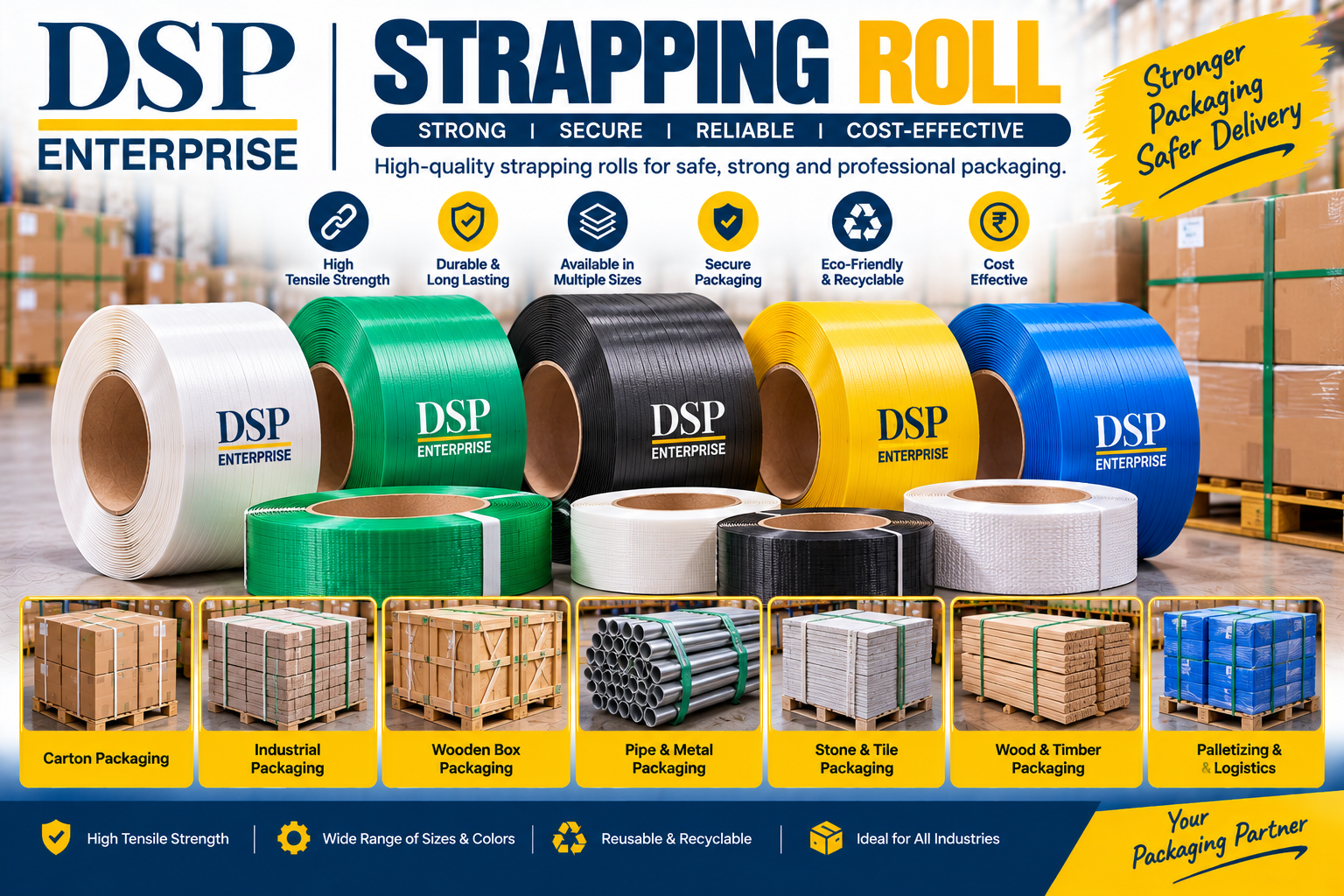
Strapping roll is an essential packaging material used to secure, bundle, and stabilize products during storage, handling, and transportation. It is commonly used for cartons, pallets, construction materials, industrial products, and heavy loads.
Available in different materials, widths, thicknesses, and strengths, strapping can be selected according to the weight and packaging requirements of a product.
What Is a Strapping Roll?
Strapping roll is a continuous band of packaging material supplied in a roll and used to hold products or packages together. It is applied around cartons, bundles, or palletized loads and tightened to provide stability.
Common types include PP (polypropylene) strapping, PET (polyester) strapping, and steel strapping, with each type designed for different applications.
Key Benefits of Strapping Roll
- Strong load securing: Helps keep packages and bundles firmly together.
- Improved stability: Reduces movement of goods during transportation.
- Suitable for heavy loads: Different grades are available for demanding applications.
- Versatile: Can be used with cartons, pallets, bundles, and industrial products.
- Easy to store: Supplied in compact rolls for convenient handling.
- Available in different strengths: Allows users to choose according to load requirements.
- Efficient packaging: Suitable for both manual and machine-based applications.
Common Applications of Strapping Roll
Strapping is widely used for securing:
- Corrugated boxes
- Palletized shipments
- Wooden products
- Furniture
- Metal products
- Pipes and profiles
- Construction materials
- Bricks and tiles
- Paper and textile rolls
- Industrial equipment
- Bundled goods
Types of Strapping Rolls
- PP Strapping Roll
Polypropylene strapping is lightweight and flexible, making it suitable for general carton sealing, bundling, and light-to-medium load applications.
It is commonly used with manual tools, semi-automatic machines, and automatic strapping equipment.
- PET Strapping Roll
PET strapping provides higher tensile strength and is commonly used for heavier loads and applications requiring stronger load retention.
It is often used for industries such as construction materials, bricks, tiles, wood products, and industrial packaging.
- Steel Strapping
Steel strapping is designed for demanding heavy-duty applications where high strength and strong load restraint are required.
It can be used for heavy industrial products, metal products, and other loads where substantial securing strength is necessary.
Manual and Machine Strapping
Strapping can be applied manually or using specialized equipment.
Manual strapping is suitable for smaller packaging operations and lower packaging volumes. Operators can use hand tools, tensioners, and buckles or seals depending on the strapping system.
Machine strapping is ideal for businesses handling large quantities of packages. Automatic and semi-automatic machines can improve packaging speed and consistency.
Strapping for Pallet Packaging
Palletized loads can shift during transportation if they are not properly secured. Strapping helps hold cartons and products together and can be used alongside stretch film and corner protection.
For effective pallet packaging, the appropriate strap strength and tension should be selected according to the load.
How to Choose the Right Strapping Roll
Before selecting a strapping roll, consider:
- Product weight
- Load dimensions
- Required tensile strength
- Type of product
- Transportation conditions
- Manual or machine application
- Required strap width and thickness
- Indoor or outdoor storage conditions
Choosing the right strap helps provide reliable load security while avoiding unnecessary material usage.
Strapping Roll for Industrial Packaging
Industrial products often require strong packaging to prevent movement and separation during transportation. Strapping can be used to bundle pipes, profiles, wooden boards, metal products, and other materials.
For demanding applications, PET or steel strapping may be preferred depending on the required strength and packaging system.
Strapping Roll vs. Stretch Film
Strapping and stretch film serve different but complementary purposes.
Strapping provides direct mechanical restraint and is useful for bundling and securing loads. Stretch film wraps around the load and helps contain products while providing protection against dust and handling exposure.
In many pallet-packaging applications, both materials can be used together for improved load security.
Why Quality Matters
The performance of strapping depends on factors such as material quality, tensile strength, elongation, dimensions, and manufacturing consistency.
Using a strap with inadequate strength can result in broken straps or unstable loads. Selecting a suitable product based on the actual packaging conditions can improve safety and reduce packaging failures.
Tips for Effective Strapping
- Select strap strength according to the load.
- Use appropriate tension without over-tightening.
- Ensure the strap is positioned correctly around the package.
- Use suitable seals, buckles, or welding systems.
- Protect vulnerable carton edges with angle boards when required.
- Inspect straps and tools regularly.
- Follow the manufacturer's recommended application method.
Conclusion
Strapping roll is a reliable packaging solution for bundling, securing, and stabilizing products during storage and transportation. From lightweight PP strapping to high-strength PET and steel strapping, different options are available for a wide range of applications.
By selecting the right strapping material, width, thickness, tensile strength, and application method, businesses can improve load stability, packaging efficiency, and transportation safety.
Find the right packaging for your business
Contact DSP Enterprise for product specifications and packaging solutions.
Request a Quote