
Thermocol Sheet: A Complete Guide to Uses, Benefits, and Applications
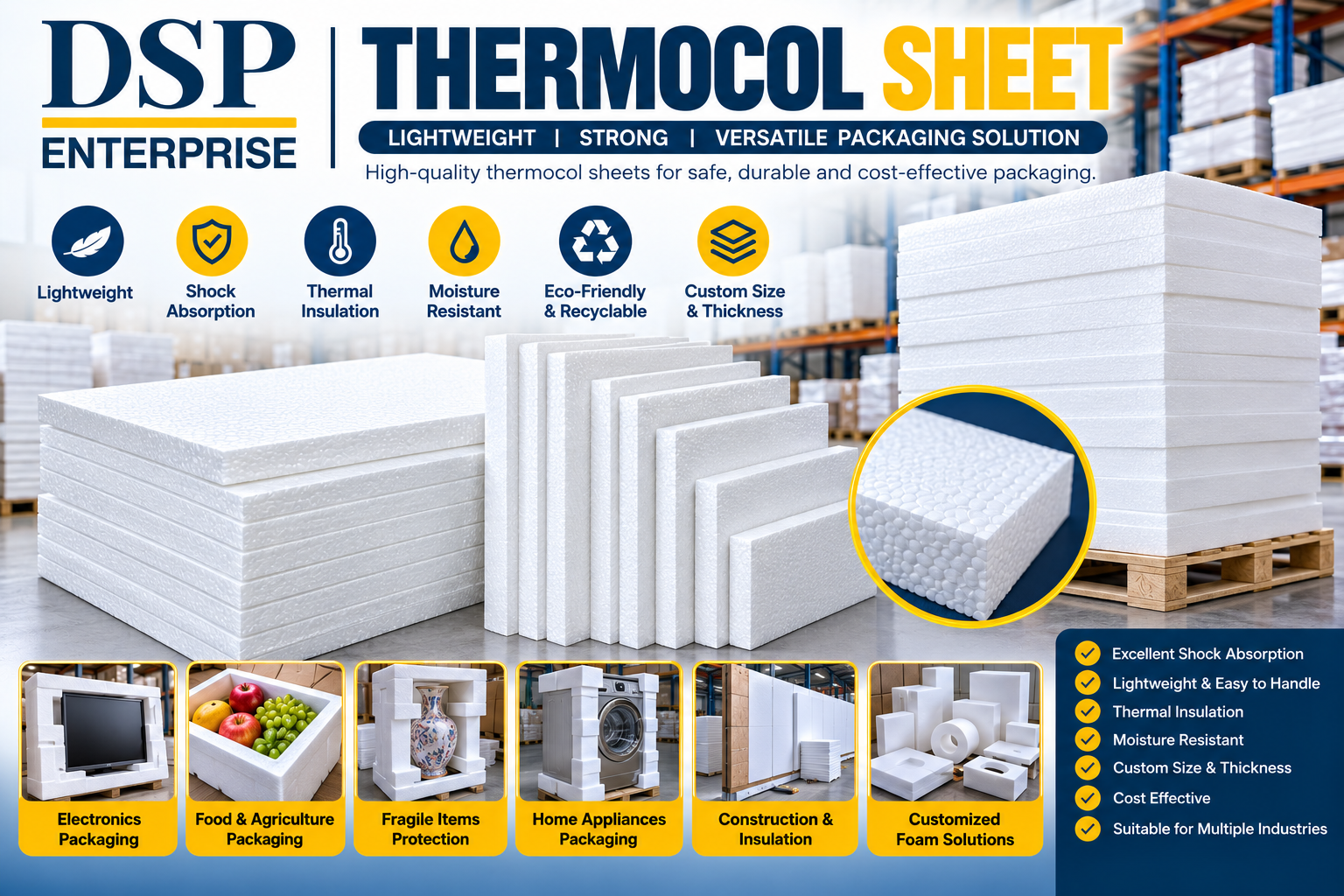
Thermocol sheet is a lightweight and versatile material widely used for packaging, insulation, construction, decoration, and various industrial applications. Its lightweight structure, cushioning ability, and thermal insulation properties make it a popular choice for both commercial and household requirements.
Whether you need to protect fragile products during transportation or require an insulating material for a specific application, thermocol sheets can provide an effective solution.
What Is a Thermocol Sheet?
A thermocol sheet is commonly made from Expanded Polystyrene (EPS). It consists of numerous small, air-filled cells that give the material its lightweight and cushioning characteristics.
Thermocol sheets are available in different sizes, thicknesses, and densities. The right specification can be selected depending on the intended application.
Key Benefits of Thermocol Sheets
- Lightweight: Easy to handle, transport, and install.
- Excellent cushioning: Helps protect fragile products from impact.
- Thermal insulation: Helps reduce heat transfer.
- Moisture resistance: Provides useful protection against humidity and moisture.
- Easy to cut: Can be shaped according to specific requirements.
- Versatile: Suitable for packaging, insulation, decoration, and industrial applications.
- Cost-effective: Provides useful protection and insulation at a relatively low material weight.
Common Applications of Thermocol Sheets
Thermocol sheets are used in a wide range of industries and applications, including:
- Packaging of fragile products
- Electronics and appliance packaging
- Glassware and ceramic packaging
- Furniture and equipment protection
- Building and construction insulation
- Cold-storage applications
- Model making and craft projects
- Decorative and exhibition work
- Temperature-sensitive product packaging
Thermocol Sheets for Packaging
One of the most common applications of thermocol sheets is protective packaging. The sheets can be placed around products to create a cushioning layer that helps protect them from scratches, vibration, and impact during transportation.
They are particularly useful for packaging fragile and delicate products such as electronic appliances, glass items, machinery components, and decorative products.
Thermocol Sheets for Thermal Insulation
The air trapped within the EPS structure gives thermocol useful thermal insulation properties. Because of this, thermocol sheets can be used in applications where limiting heat transfer is important.
The required sheet thickness and density depend on the specific insulation requirements and operating conditions.
How to Choose the Right Thermocol Sheet
Before purchasing a thermocol sheet, consider the following factors:
- Thickness: Choose the thickness according to the required cushioning or insulation level.
- Density: Different applications may require different densities.
- Sheet dimensions: Select a size that minimizes cutting and material waste.
- Application: Packaging, insulation, construction, and decorative applications may require different specifications.
- Product weight: Heavier products may require stronger and higher-density material.
Thermocol Sheet for Industrial Applications
Industries often use thermocol sheets to protect products during manufacturing, storage, and transportation. Customized sheets can also be cut to match the shape and dimensions of particular products.
Using suitable protective material can help reduce damage, improve handling efficiency, and maintain product quality throughout the supply chain.
Why Quality Matters
The quality and density of a thermocol sheet can significantly influence its performance. A suitable sheet should have consistent structure, appropriate density, and sufficient strength for the intended application.
For packaging and insulation projects, selecting the correct specifications rather than simply choosing the lowest-cost option can provide better long-term value.
Conclusion
Thermocol sheets are a lightweight, flexible, and economical material with applications ranging from protective packaging to thermal insulation and construction. Their cushioning properties, ease of handling, and insulating characteristics make them useful for many commercial and industrial requirements.
Choosing the appropriate thermocol sheet thickness, density, and size can help ensure effective performance and better protection for your products and applications.
Find the right packaging for your business
Contact DSP Enterprise for product specifications and packaging solutions.
Request a Quote